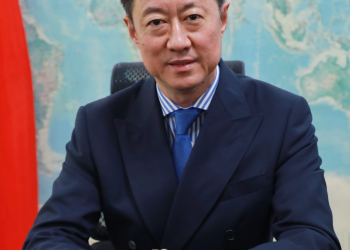






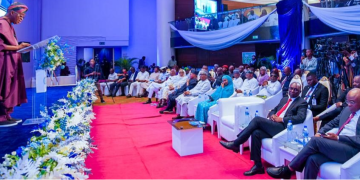

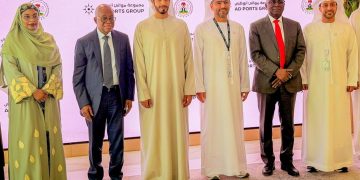

















- Director-General of Nigeria Association of Small Scale Industries, Chris Oputa, President of the Nigeria Association of Small and Medium Enterprises, Dr. Abdulrashi Yerima, Chairman Presidential Tax Committee, Taiwo Oyedele, and Chairman of the Organised Private Sector of Nigeria, Jani Ibrahim, at an industry strategy meeting in Lagos…yesterday
By Anthony Nwachukwu
The Organised Private Sector of Nigeria (OPSN) has listed policy coherence, affordable financing, smart regulation and green transition among the measures imperative to safeguarding businesses and repositioning the economy for sustainable growth.

Speaking at the OPSN Strategy Meeting, the Chairman of OPSN, Jani Ibrahim, stressed that Nigeria’s private sector remains the most reliable engine for growth, employment, innovation and resilience.
He regretted that businesses were grappling with rising input costs, exchange rate volatility, energy constraints, logistics inefficiencies and shrinking consumer purchasing power, warning that these pressures threaten production, payroll decisions, and national competitiveness.
Ibrahim noted that small and medium enterprises (SMEs) account for over 90 per cent of businesses and more than 80 per cent of employment, while the private sector contributes well over half of national Gross Domestic Product (GDP).
He urged government to treat private sector survival and growth as a national priority, listing cumbersome business registration processes, high cost of finance and regulatory overlaps among practices that have continued to undermine enterprise development.
He lamented that domestic credit to the private sector has remained below 15 per cent of the GDP – far lower than peer economies, and described high lending rates as inimical to long-term investment.
According to him, the proposed OPSN Bank, which is designed to provide single-digit interest financing, could unlock manufacturing capacity, deepen value chains and stimulate job creation.
Ibrahim also decried the prevailing regulatory excesses, including overlapping inspections and duplicative compliance demands, saying that they escalate operating costs, particularly for manufacturers and SMEs.
On climate policy, Ibrahim urged a realistic and context-sensitive green transition, noting that ESG compliance and carbon market readiness require capacity building, access to green finance and policy clarity to prevent Nigerian businesses being edged out of global value chains.
Meanwhile, the National President of Nigeria Association of Small and Medium Enterprises (NASME), Dr. Abdulrashid Yerima, has described the tax reforms as capable of addressing the persistent challenges facing MSMEs. According to him, they will significantly reduce multiple taxation, arbitrary levies and excessive import duties that have historically constrained small businesses.
Yerima explained that for years, NASME members have endured overlapping taxes by different tiers of government, alongside unauthorised collections by non-state actors, which have eroded profitability and discouraged expansion.
He expressed optimism that the reform, if well implemented and monitored for the expected result, would deliver a clearer, fairer and more predictable tax framework that enables MSMEs to reinvest, scale operations, create jobs and drive inclusive economic growth.
On his part, President of the Manufacturers Association of Nigeria (MAN), Francis Meshioye, supported the tax reforms, which he described as timely and essential to easing the burden on manufacturers and stimulating economic recovery.
However, he stated that its success would depend largely on faithful and transparent implementation, especially by sub-national governments, warning that inconsistent application across states could undermine its benefits.
Meshioye further stressed the need for continuous engagement and collaboration with relevant agencies to prevent abuse by illegal tax collectors and ensure strict enforcement of approved tax provisions.
According to him, only a transparent, predictable and uniformly applied tax regime can restore business confidence, attract investment and reposition Nigeria’s manufacturing sector for sustained growth.