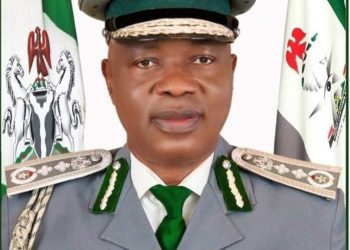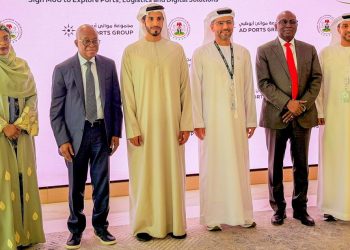











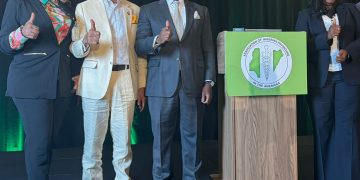









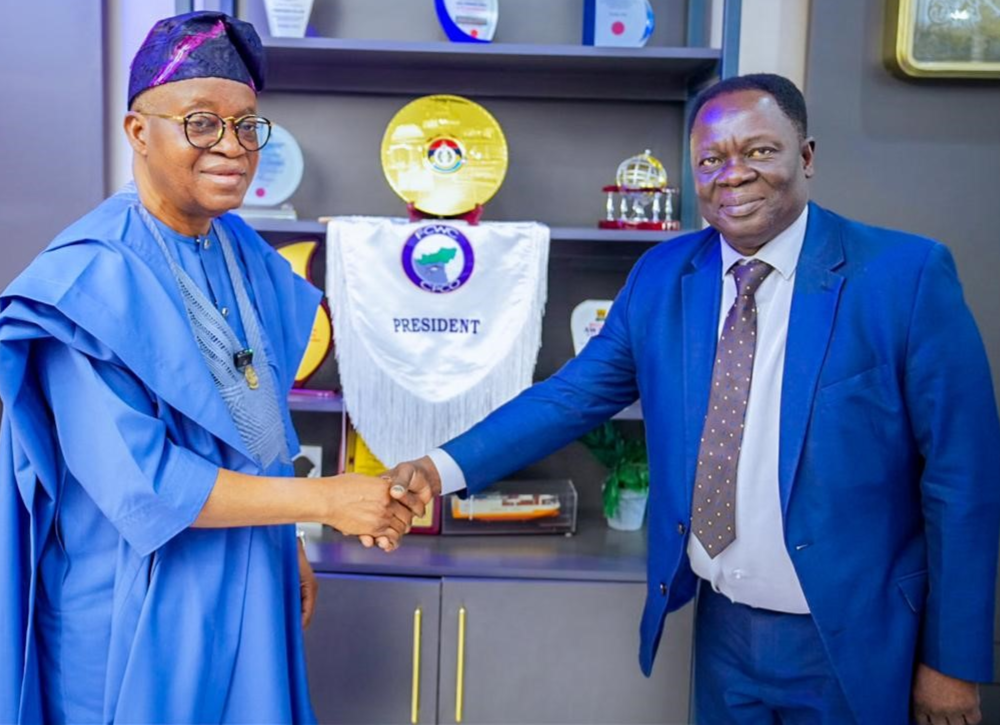
- Minister of Marine and Blue Economy and Chairman of the Conference of Ministers of the Fisheries Committee for the West Central Gulf of Guinea (FCWC), Dr. Adegboyega Oyetola (left) and FCWC Secretary-General, Antoine Djihinto, when the later led the body’s secretariat staff on a working visit to the minister in Abuja…recently
By Anthony Nwachukwu
The Fisheries Committee for the West Central Gulf of Guinea (FCWC) has announced Nigeria’s acceptance to serve as the pilot country for the formal implementation of the Regional Record of Authorised Fishing Vessels in West Africa.

Announcing the development in Abuja during a meeting with the body’s Secretary-General, Antoine Djihinto, and secretariat staff, FCWC Chairman and Nigeria’s Minister of Marine and Blue Economy, Dr. Adegboyega Oyetola, said the move aims at combating illegal fishing and strengthening marine governance across the Gulf of Guinea.
The minister said Nigeria’s decision to host the pilot phase of the Regional Record of Authorised Fishing Vessels demonstrates its resolve to translate regional leadership into measurable outcomes for sustainable fisheries management, according to his Special Adviser on Media, Dr. Bolaji Akinola.
In a statement, Oyetola noted that “the proposed Regional Record of Authorised Fishing Vessels will create a verified database of industrial fishing vessels authorised to operate within the maritime zones of FCWC member-states, covering both foreign and national fleets.”
He further explained that “the system is designed to improve transparency, accountability and cross-border cooperation in a region heavily affected by illegal, unreported and unregulated fishing.
“The initiative builds on a roadmap endorsed by member states and reaffirmed in the Monrovia Declaration, which set out steps for establishing the register as a shared governance tool across West Central Africa.”
He added that Nigeria expects the pilot phase to test feasibility, identify operational gaps and generate practical lessons for broader regional rollout. He pledged the country’s deployment of experience to guide and support member-states once implementation expands, stressing that collective action was essential to protect fisheries resources and livelihoods in the Gulf of Guinea.
According to him, “the project is envisaged as a formalised and validated regional database containing comprehensive and reliable information on fishing vessels authorised to operate within the maritime jurisdictions of FCWC member-states.
“This initiative represents a major step forward in strengthening transparency, accountability and cooperation in fisheries governance across our shared waters.”
The minister also highlighted complementary regional efforts, including joint patrols and enforcement initiatives under the West Africa Sustainable Ocean Programme, implemented by the FCWC in partnership with the European Fisheries Control Agency, to deter illegal fishing.
Meanwhile, the chairman disclosed that Nigeria’s draft National Plan of Action on illegal fishing was being reviewed and updated following the transfer of fisheries oversight to the Federal Ministry of Marine and Blue Economy, underscoring the country’s determination to address illicit fishing activities.
He proposed deeper institutional engagement with the FCWC, including a high-level Nigerian mission to the organisation’s secretariat and regional monitoring centre, as well as collaboration on harmonising food safety and fisheries regulatory standards across member-states to boost trade and consumer protection.
Reaffirming Nigeria’s commitment to regional cooperation, Oyetola said his tenure as chairman of FCWC Conference of Ministers would focus on practical outcomes, stronger institutions and sustainable use of ocean resources, while describing the pilot vessel register as a defining step towards transparent and accountable fisheries governance in West Africa.
Earlier, the FCWC Secretary-General, Djihinto, commended Oyetola for his commitment to addressing illegal, unreported and unregulated fishing, and for boosting fish production in the country.