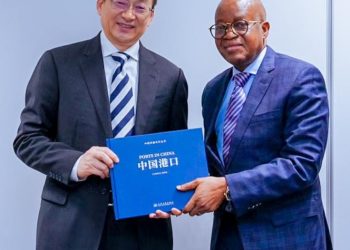
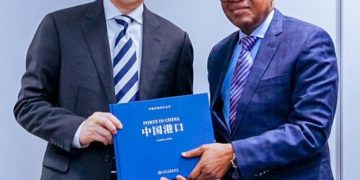
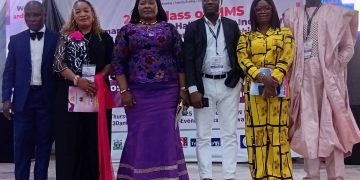
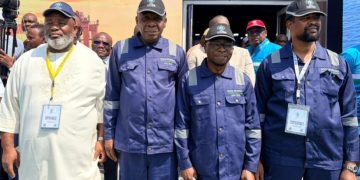
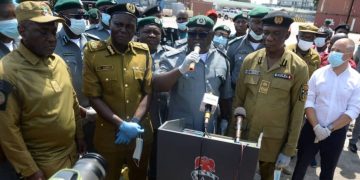

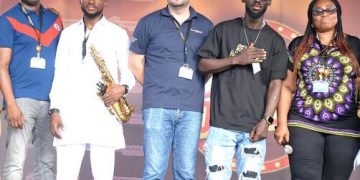

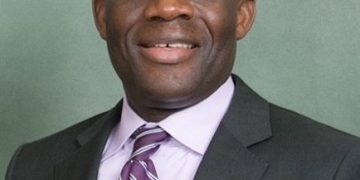
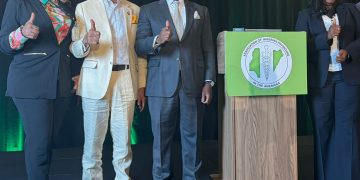
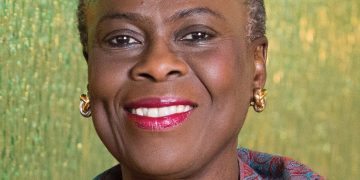







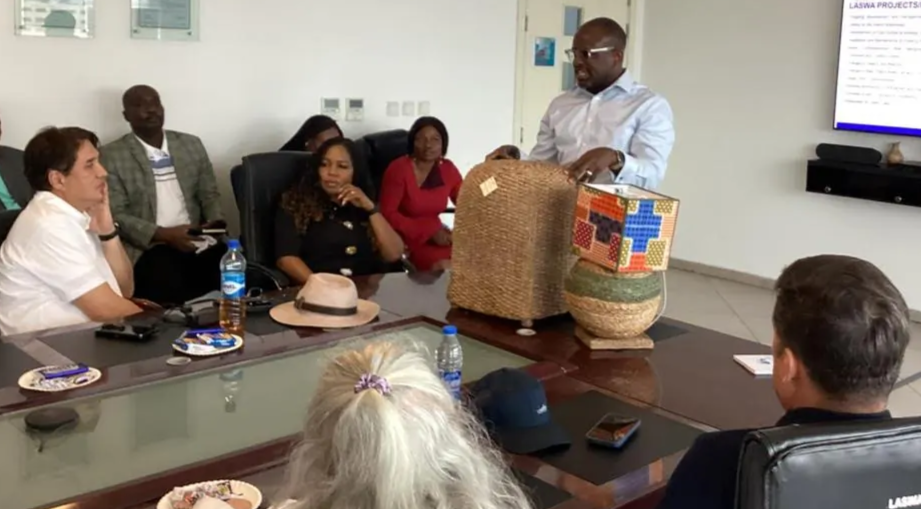
- General Manager of the Lagos State Waterways Authority, Damilola Emmanuel (right) addressing a delegation from the Interferry Association and the Maritime Organisation of West and Central Africa during their facility tour of the agency’s waterways assets
By Anthony Nwachukwu
In collaboration with the Maritime Organisation of West and Central Africa (MOWCA) and Interferry Association, the Lagos State Waterways Authority (LASWA) says it is exploring areas to improve safety on the state’s waterways through collaboration and knowledge sharing.
The General Manager of LASWA, Damilola Emmanuel, who disclosed this while a delegation of MOWCA and Interferry on a tour of Lagos State waterways assets, highlighted the importance of ferry safety in inland waterways operations.
He explained that when MOWCA approached the state government partnership in hosting a ferry safety conference, the government readily accepted, mindful that it would be doing this with international partners who can share knowledge on exactly how to improve the state’s safety practices.
The manager describes Interferry as an international safety body that promotes ferry safety from Europe to America, Asia and Africa,” adding that it is a big ferry safety body that has been doing this all over the world.
“They have not been to West Africa before now, and felt they needed to come down to also have a ferry safety conference over here.”
Meanwhile, Emmanuel explained that in LASWA’s inland waterways safety drive, the agency’s water guards ensure that people wear life jackets, just as it has introduced a bi-annual inspection of boats.
He added that LASWA has introduced technology for smarter operations, in line with global standards, adding that with it, “we have been able to monitor real-time some of our jetties and even have communication with some boat operators as we go on the waterways.
“Of course, we have continued to talk about safety to the passengers, even organising training and workshops for the captains and deckhands, in partnership with companies like Yamaha, which has organised a deckhand and captains training over time.
He further explained that the LASWA Control Room has helped the management’s safety campaign, with data from our facility aiding steady informed decisions. According to him, through this, management now knows where and when more people are using waterways transportation, and is able to ramp up safety measures accordingly.
Speaking on plans to revolutionise the sector, Emmanuel explained that the agency would be bringing in electric boats in a few years under the Omi-Eko project.
According to him, the introduction of electric ferries, upgrade of the existing jetties and terminals, dredging of the inland waterways and capacity building for LASWA are projects that basically seek to revolutionise water transportation in Lagos.
“The electric ferries won’t phase out the current petrol boats but work side by side the existing boats,” he said. “That is why we’ve encouraged the informal sector to form cooperatives so that it will be easy for government to support them.”
On his part, the Chief Executive Officer of Interferry, Mike Corrigan, said his company came with 12 safety experts to help LASWA improve all safety phases – from navigation to safe operation of vessels and life-saving.
“What we want to do is to be able to tell LASWA what we’ve learnt and offer our guidance and assistance,” Corrigan stated. “LASWA is now a member of Interferry – a worldwide ferry trade association.
“We represent the ferry industry around the world with almost 300 members. We have a great opportunity to be able to share and learn on both sides. For now, Lagos is the only African city we have this with. However, we want to come into Africa more often to be able to help improve the waterways in Africa.
“We’ve had a couple of conferences already. This will be our third conference and we hope to come back and offer our services to anybody who would like to participate with Interferry.”