




















By Anthony Nwachukwu
Nigerians joined the Chinese community in Abuja for the temple fair to mark the 2026 Spring Festival celebrations and the 55th anniversary of both countries’ diplomatic relations.

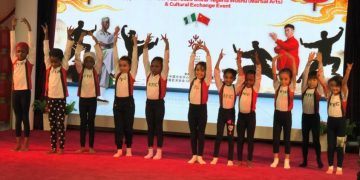
Held over the weekend at the China Cultural Center in Abuja, the event attracted hundreds of people to the fusion of Chinese and Nigerian traditions and hospitality, featuring traditional Chinese Wushu performances and Nigerian cultural exhibitions, music, games and a wide variety of Chinese cuisine, among others.
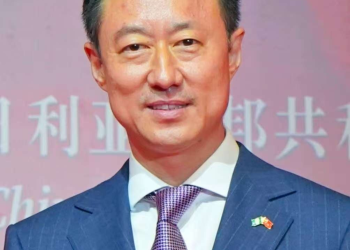
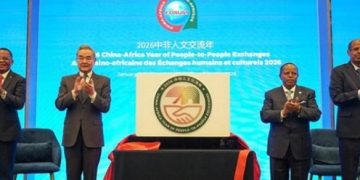
Speaking at the event, which also launched the China-Africa Year of People-to-people Exchanges, the Chinese Embassy Charge d’Affaires, Zhou Hongyou, noted that after 55 years of close cooperation, both countries’ relations have gone beyond bilateral economic ties to “a model of South-South cooperation.”
Using the Year of the Horse symbolism – the emblem of the 2026 Chinese lunar year, Zhou noted that it resonates with Nigeria’s national identity, stating that “in Chinese culture, the horse symbolises hard work, perseverance, unity and innovation. The horse also features prominently on the Coat of Arms of Nigeria. These qualities define our relations.”
Zhou described the Spring Festival as the most significant cultural celebration in China, symbolising reunion, continuity and shared heritage for hundreds of millions of families around the world.
He added that the 2026 Spring Festival, scheduled to be celebrated globally on February 17, has gained added international recognition following its inclusion in the UNESCO Representative List of the Intangible Cultural Heritage of Humanity in 2024, underscoring its universal values of peace, harmony and cultural exchange.
Zhou further explained that the Temple Fair was conceived not only as a cultural celebration but also as a bridge for fostering closer understanding between Chinese and Nigerian communities through shared experiences in food, art, sports and tradition.
He recalled that diplomatic relations between China and Nigeria were formally established on February 10, 1971, and has since evolved into broad-based cooperation across multiple sectors.
On the growing economic integration between both countries, the envoy disclosed that both sides were “actively consulting on the implementation of the zero-tariff measures,” noting the recent launch of the Ni Hao! China radio programme as important to enhancing mutual understanding between the two peoples.
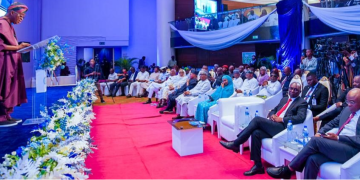
On his part, the Director-General of the Nigeria-China Strategic Partnership, Joseph Tegbe, commended the tangible outcomes of China-Nigeria cooperation, particularly in infrastructure development.
Highlighting the one-billion-dollar National Integrated Poultry Project, which is a Chinese agricultural model, Tegbe said the project is not just about food security but also about jobs, dignity and opportunity for Nigerians. He further disclosed that the Ajaokuta Steel Complex would soon be revitalised through the Nigeria-China cooperation.
Meanwhile, participants at the temple fair, which concluded with interactive cultural exchanges that reinforced the people-to-people theme of 2026, shared that the anniversary marked a strategic milestone for further advancing cooperation in industrialisation, agriculture and talent development.